

Devonport High School For Boys ~ Plymouth, Devon.
Client : D.H.S.B.

The main buildings that constitute for the larger part of Devonport High School for Boys were originally designed by the British army for use as an army medical facility on the North side of Stonehouse Creek to match in style the Royal Naval Hospital that had been built in 1760 on the opposite Southern side of the creek. Built by Napoleonic French prisoners of war, who were housed in prison hulks on the Hamoaze, this hospital was completed nearly forty years later in 1797. Known as the Stoke Military Hospital, for its time the design and layout was revolutionary as it enabled patients to be quarantined and by doing so reducing the risk of spreading diseases and infections, becoming the blueprint for all military hospitals throughout Europe. It was used extensively during the Crimean War, Second Boer War and then again during the First and Second World Wars. After the Second World War the hospital was decommissioned and both Tamar High School and Devonport High School for Boys, who were returning from wartime evacuation, moved into the former military hospital. Tamar High School closed down in 1989 where by Devonport High School for Boys expanded and then occupied the whole site. The buildings here are protected and have been given a designated Grade II* listing by Historic England.
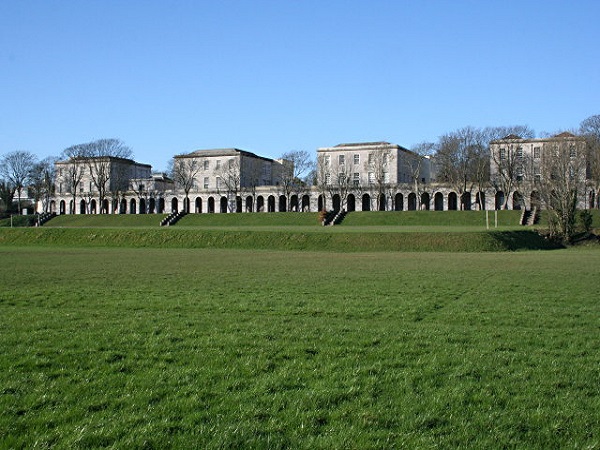
Built primarily from Plymouth limestone with Portland stone dressings, the buildings of the former military hospital consist of an admin block and four square ward blocks that are three storeys high and built in a line which are joined together by an arched arcade that is roughly 545 feet (166m) long, and at that time one of the longest arcades in Great Britain. Above the arcade sits a Portland stone balustrade that runs its full length. The school had contacted us to take a look at the balustrading.
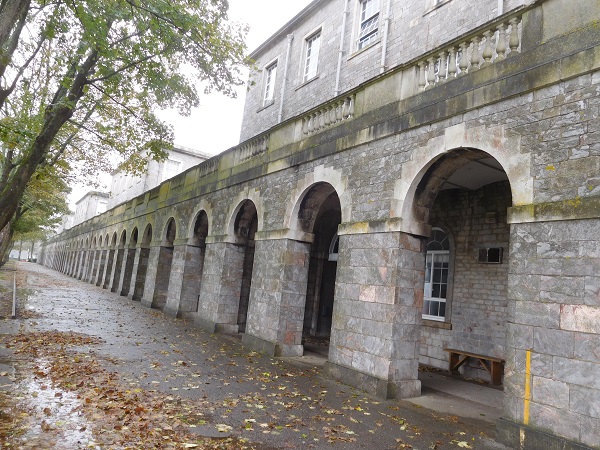
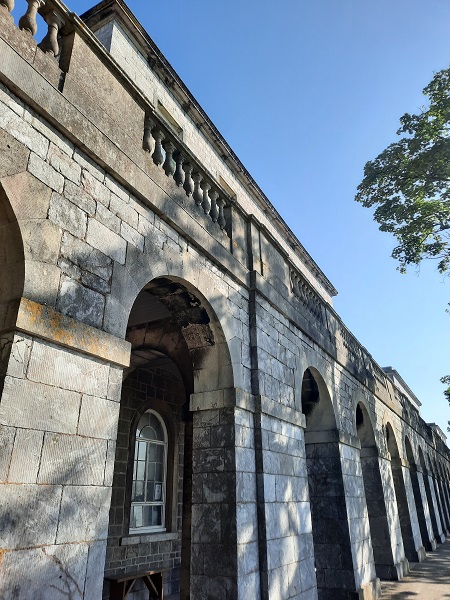
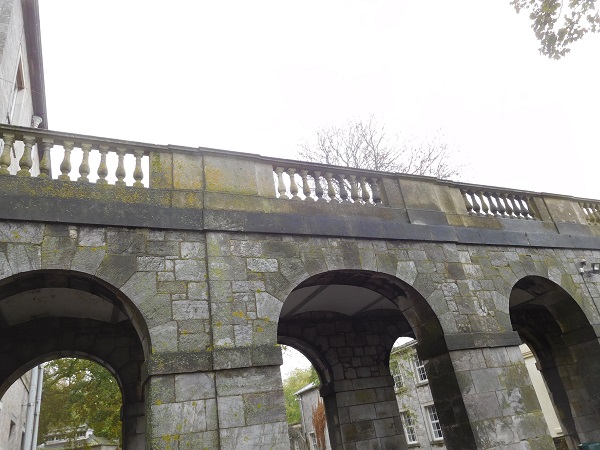
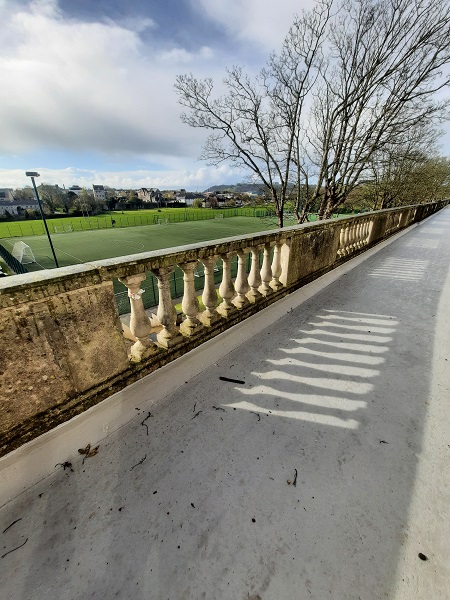
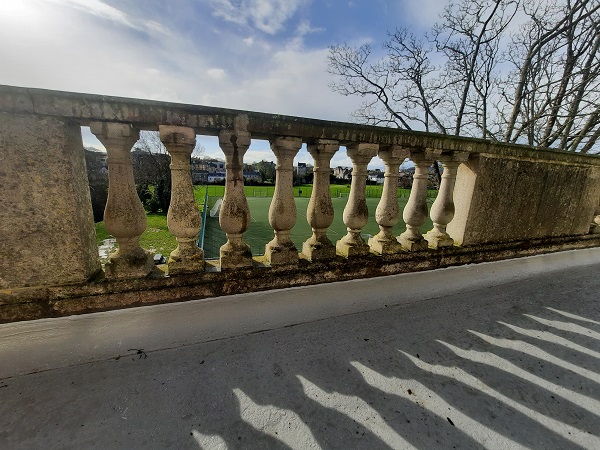
Many of the balusters had become loose and some were cracked.
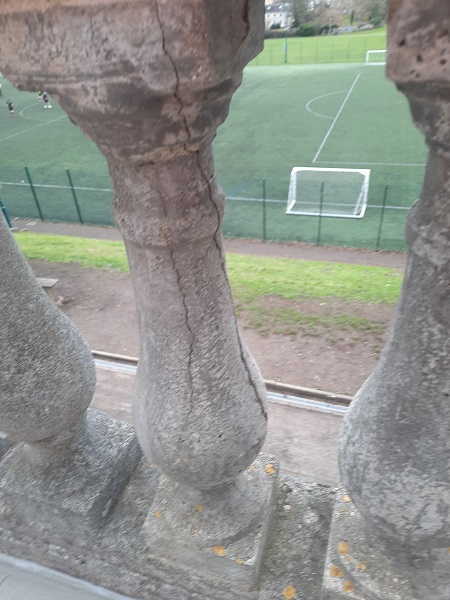
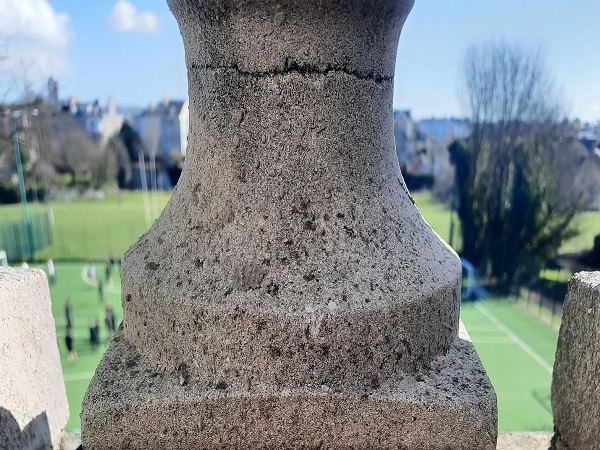
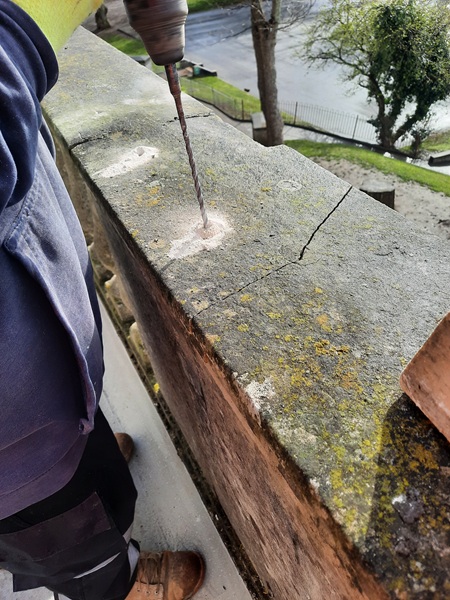
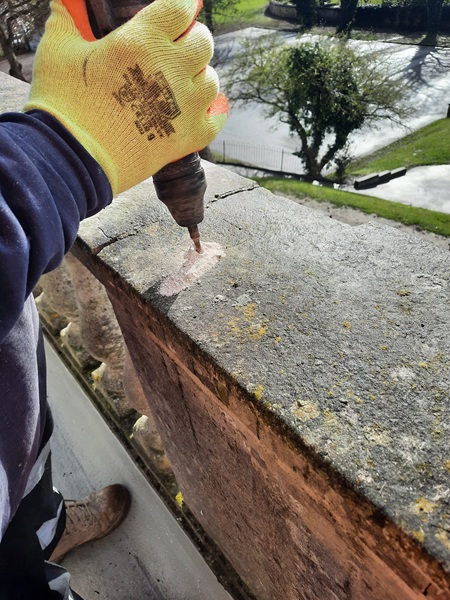
Sections of the coping were also loose and the main concern here was the possibility that masonry could fall out onto the area below, posing a serious health and safety risk. First of all we set about stabilizing the loose sections of coping. This we did by drilling 6mm diameter holes through the coping and into the wall section below. These went in to a depth of roughly 200mm.
Then 8mm diameter stainless steel helical ties were inserted into the pre-drilled holes.
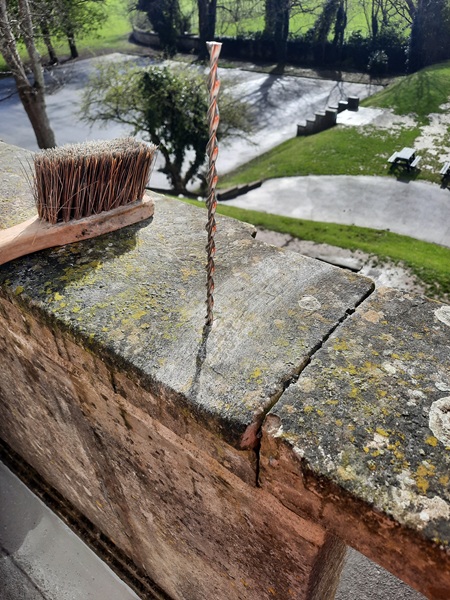
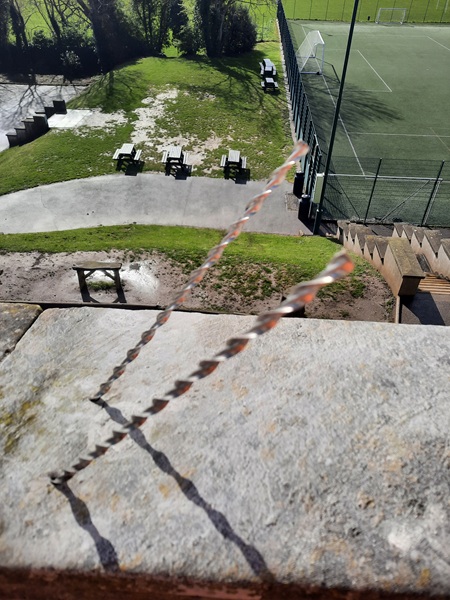
These were then driven into position using a special attachment that is fixed to the drill.
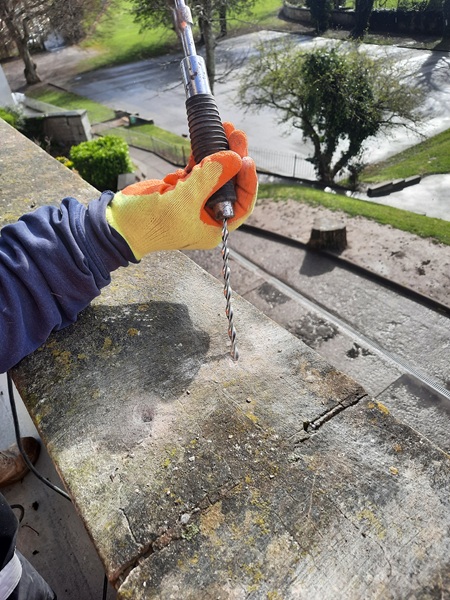
The helical ties twist as they are hammered into place, much like a giant screw. Being slightly bigger in diameter than the hole it goes in, the ties bite into the sides of the hole. They are hammered in 20mm below the surface of the finished coping leaving just a small hole that is made good with a Portland stone repair mortar. This method causes minimal disturbance to the masonry, requires no epoxy resin to fix the ties and once in position they are not coming out. These ties were fixed all along the length of the coping where required. Next we turned our attention to missing sections of coping that had fallen out over time.
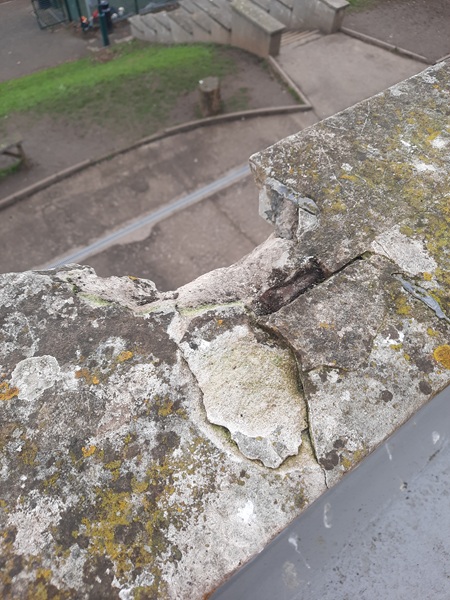
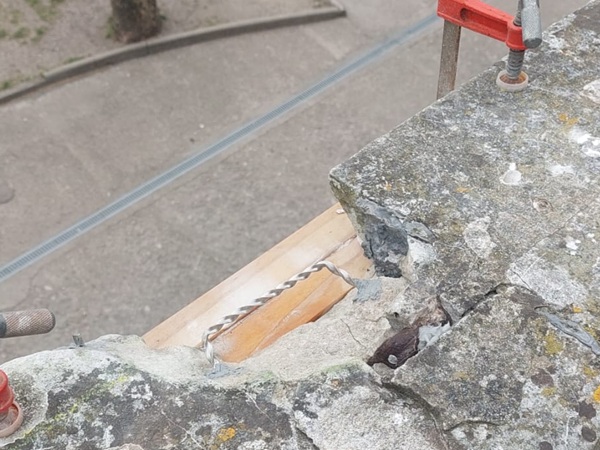
A timber profile was clamped into position and a stainless steel helical armature was fixed in situ with epoxy resin. This forms a reinforced mechanical fixing for the new repair to be built around.
Next the repair was built up using a Portland stone repair mortar.
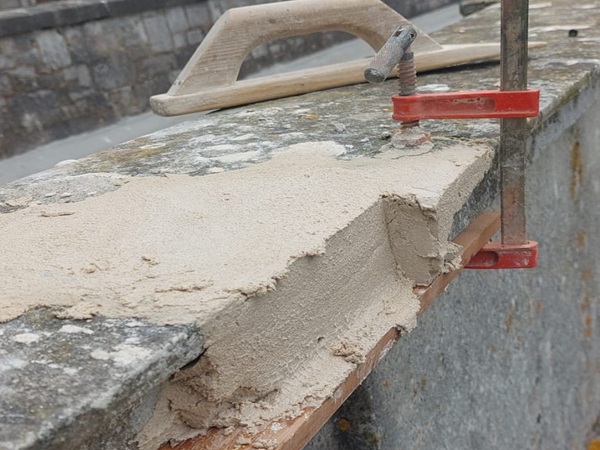
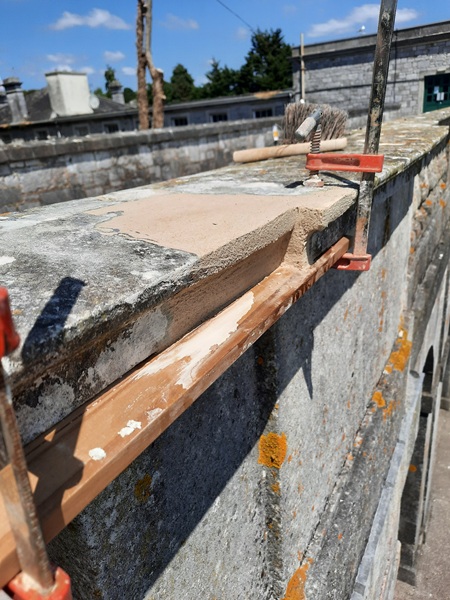
The new repair is finished off to match the original profiles.
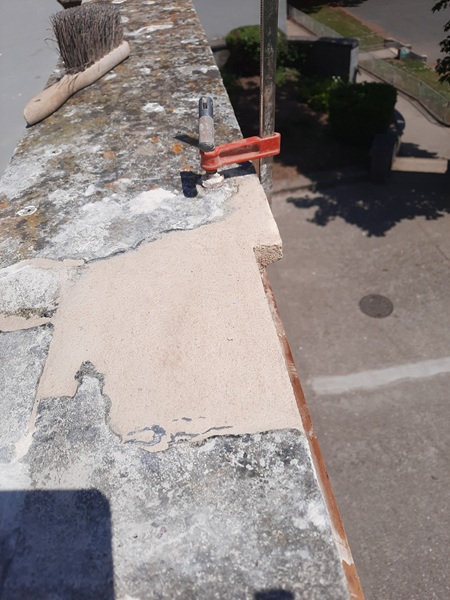
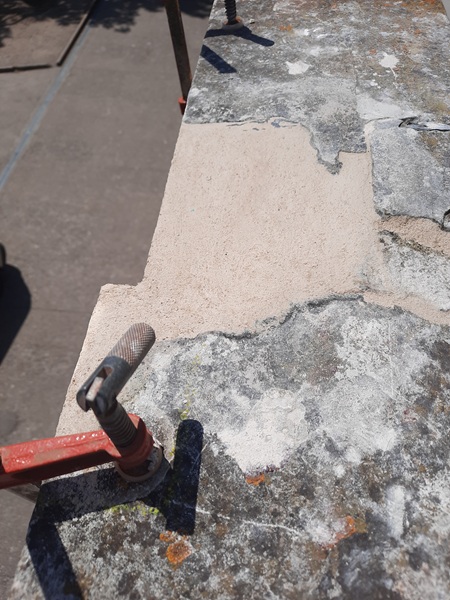
With the copings now repaired and stabilized we switched to sorting out the loose and damaged balusters. New re-constituted Portland stone balusters were sourced to replace the ones that were deemed beyond repair. It was difficult to get an exact match as the balustrading consisted of balusters that been replaced over the years with slightly different profiles, but what we got matched in pretty well. Five balusters in total had to replaced.
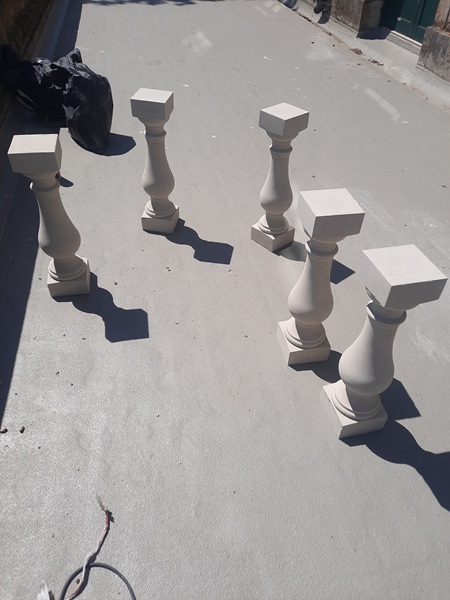
A baluster is a single post, and when several of these balusters are set in a row, it’s called a balustrade, or balustrading. They come in many architectural shapes and designs. The word comes from the French word balustre, the Italian word balaustro, from Latin balaustium and from Greek balaustion describing its shape. Its shape derived from the wild pomegranate flower. Balusters and balustrades first appeared between the 13th and 7th centuries B.C. and can be found in ancient bas-reliefs and sculptural murals depicting Assyrian palaces. But it was in the 14th century during the early Renaissance Period that balusters became architecturally prominent.
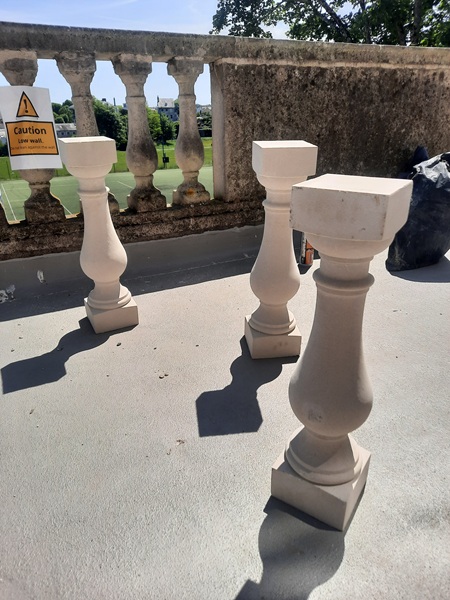
The defective balusters were carefully removed.
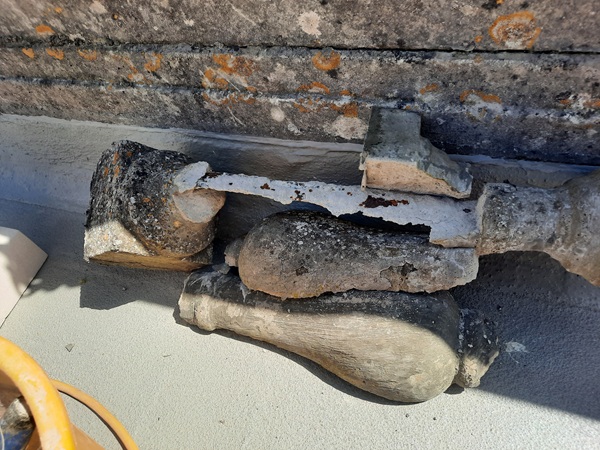
Then prepared for the new ones to go back in place.
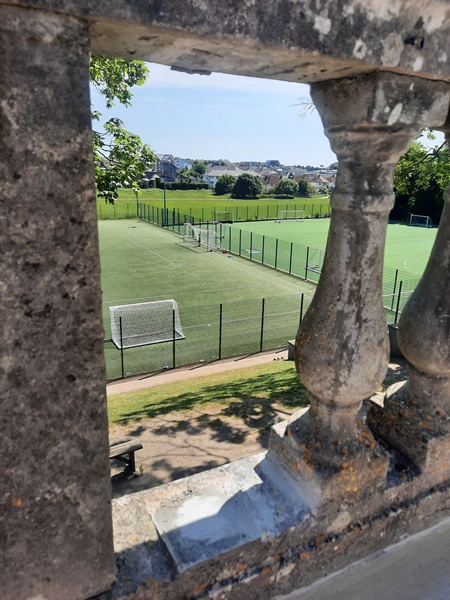
They were set in on a bed of Portland stone mortar and the top joint was packed tight with slate and epoxy resin which was then pointed using the Portland stone mortar.
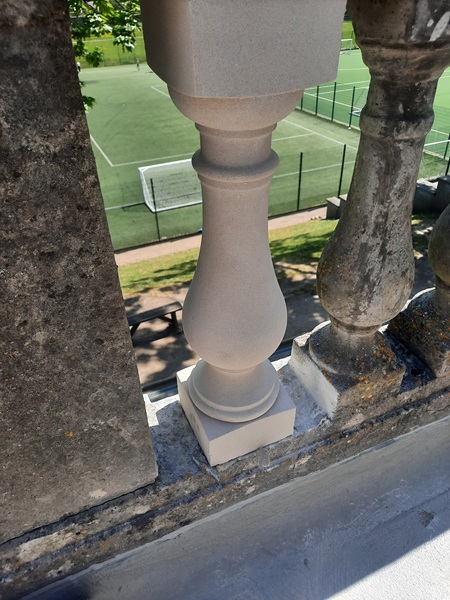
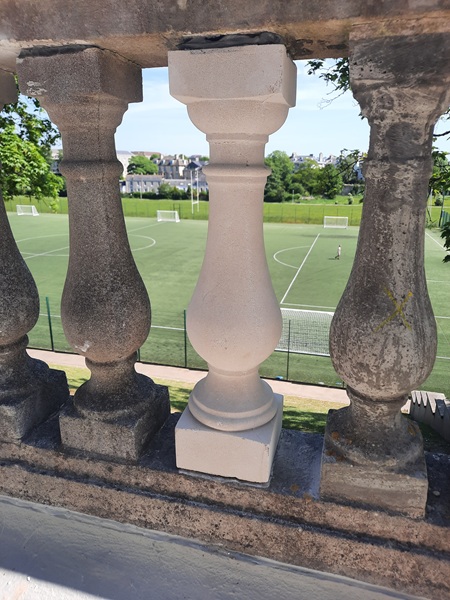
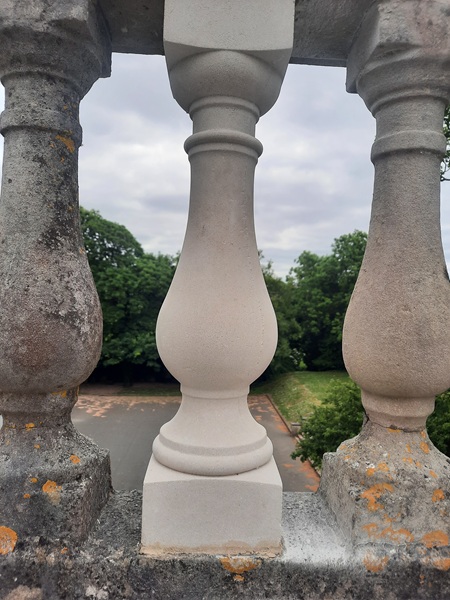
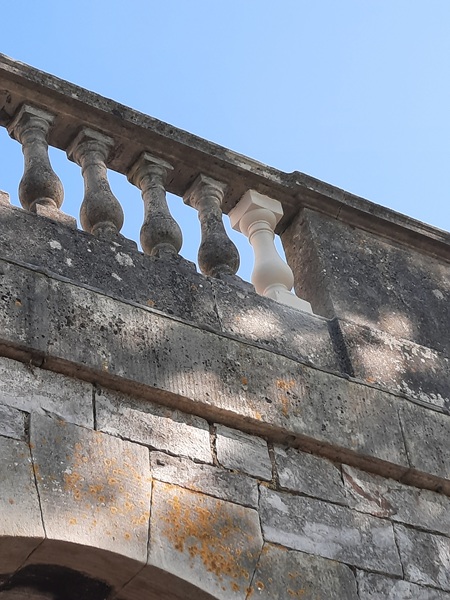
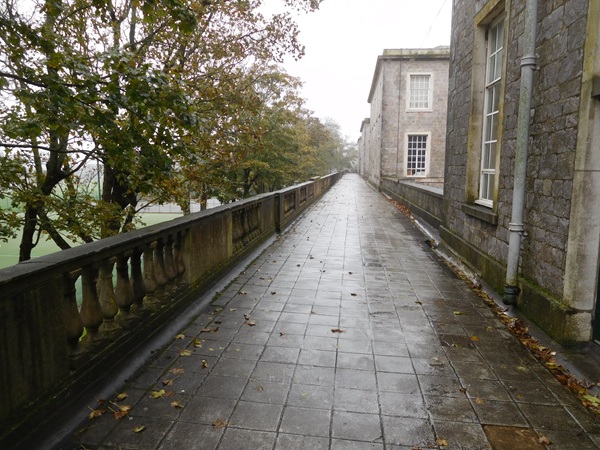
After the new ones were replaced we checked every single baluster along the whole length of the arcade and all the ones that had any movement had the top joint packed tight with slate and epoxy resin which was then pointed in using a Portland stone mortar. An arcade is often confused with a colonnade. Arcades are determined by a series of columns, pillars or piers with arches that form a covered walkway underneath, which is the case here. A colonnade however is determined by a series of columns with a flat beam across the top. A classic example of a colonnade is the Parthenon in Greece.
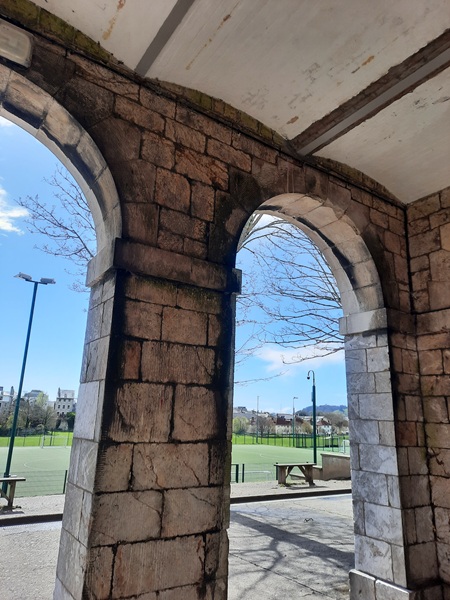
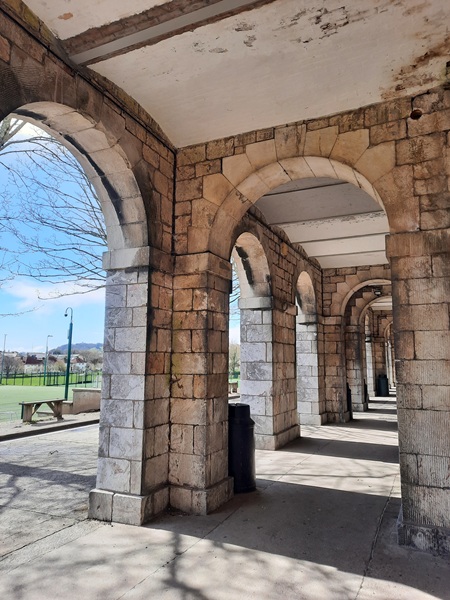
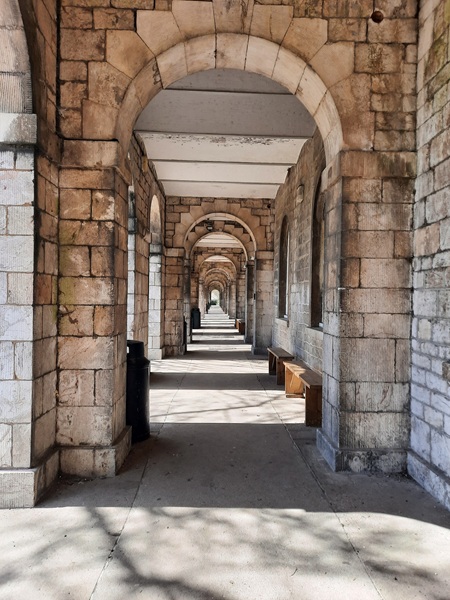
Probably one of the most famous people connected to the Stoke Military Hospital was Dr. James Barry.

James Barry is technically the first woman doctor to graduate from medical college in British history. The reason that she was able to achieve this remarkable feat some half a century before women were permitted to become doctors is because she spent her entire professional life masquerading as a man. As if this feat was not enough, she was also the youngest person to pass all the necessary exams. James Barry was frequently teased by colleagues over the sound of his voice and often felt he had to go so far as to challenge his tormentors to duels and on at least one occasion shot one man dead through the lung. The teasing no doubt died down after this particular incident. Born Margaret Anne Bulkley in Cork, 1789, Barry was posted to Plymouth as a hospital assistant at the Stoke Military Hospital during the tail end of the Napoleonic Wars in 1813. Whilst in Plymouth he was promoted to assistant surgeon before being posted to Cape Town in 1816. For the next half a century Barry presented herself as a man until she died of dysentery in 1865. She had an illustrious and varied career as a military doctor all over the Empire, eventually rising to the rank of Inspector General in charge of all military hospitals, equivalent to Brigadier, the second-highest medical office in the British Army. Her appearance certainly caused people to suspect that something was strange, she was tiny in an army of men and her hands were remarked to be particularly small and effeminate. Despite these concerns, her medical knowledge and manner were never questioned and she retired on half pay due to illness in 1858 after a full career. It was not until her death that her secret was discovered whilst preparing her body for burial.
‘Up The Creek Without A Paddle’
The following image shows the Stoke Military Hospital long before the creek was filled in.
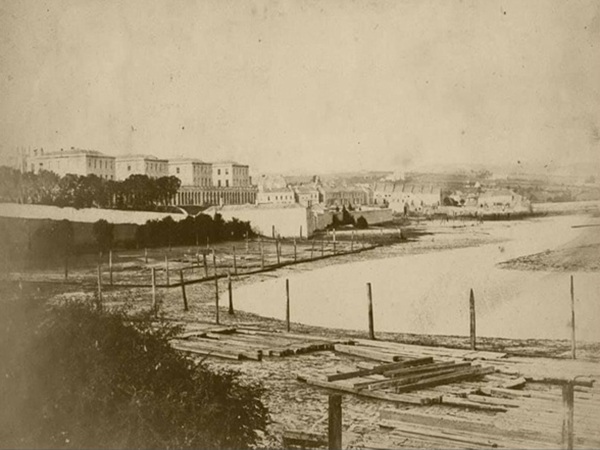
The phrase ‘Up the creek without a paddle’ describes being in a difficult, hopeless situation, and whilst its origin is debated, a popular theory links it to Stonehouse Creek in Plymouth, England, where injured sailors were taken to the Royal Naval Hospital and the Stoke Military Hospital by boat, effectively being ‘up the creek’ and being transported without the means of a paddle to control their own fate. A fate either ending in recovery or which was very often the case, meant death in a 19th century hospital.